Disease progression

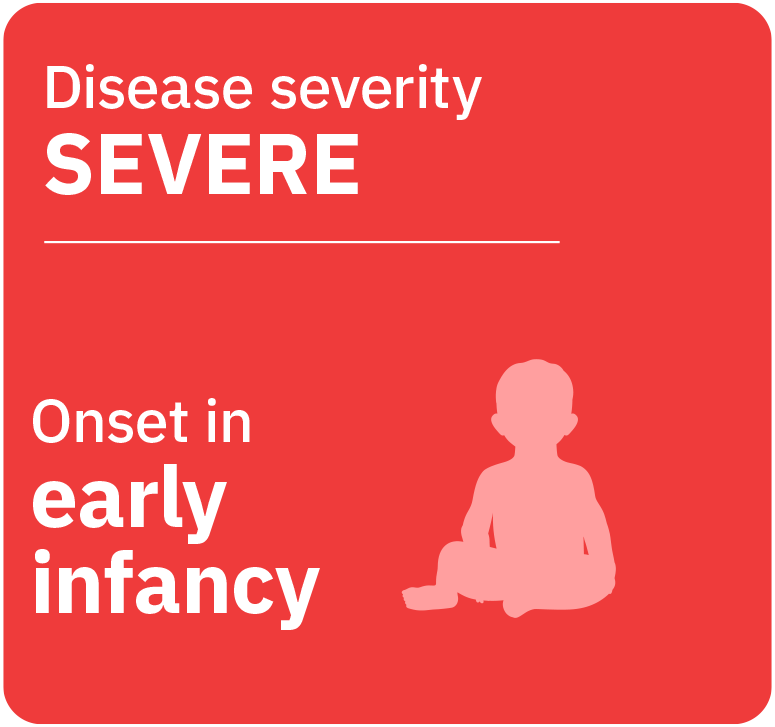
Alpha-Mannosidosis is a lifelong multi-systemic progression with neuromuscular and skeletal deterioration over decades. The timing of the appearance of symptoms correlates with the severity of the disease. Neonates with lysosomal disorders are mostly asymptomatic and only rarely severely affected, which delays diagnosis.1 ,2

The first decade of life is characterised by early development of hearing impairment, psychomotor delay, frequent recurrent infections, especially upper airway infections, pulmonary infections and acute/serous otitis media infections.3


During the second and third decades of their lives, patients develop polyarthropathy, ataxia, muscle weakness, and severe skeletal problems, which eventually leave the patient unable to walk. Patients typically present with skeletal and facial abnormalities, hearing loss, intellectual disability, and immune deficiency.1

In the more severe form, where the condition appears in infancy in most cases, and leads to early death following severe infections.1 However, those presenting with the milder form can usually survive into adulthood.1
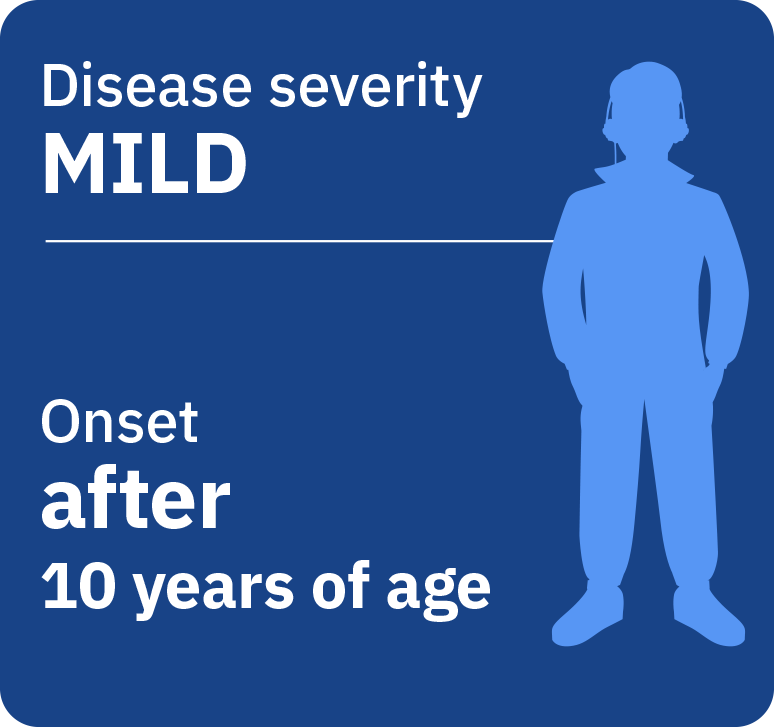
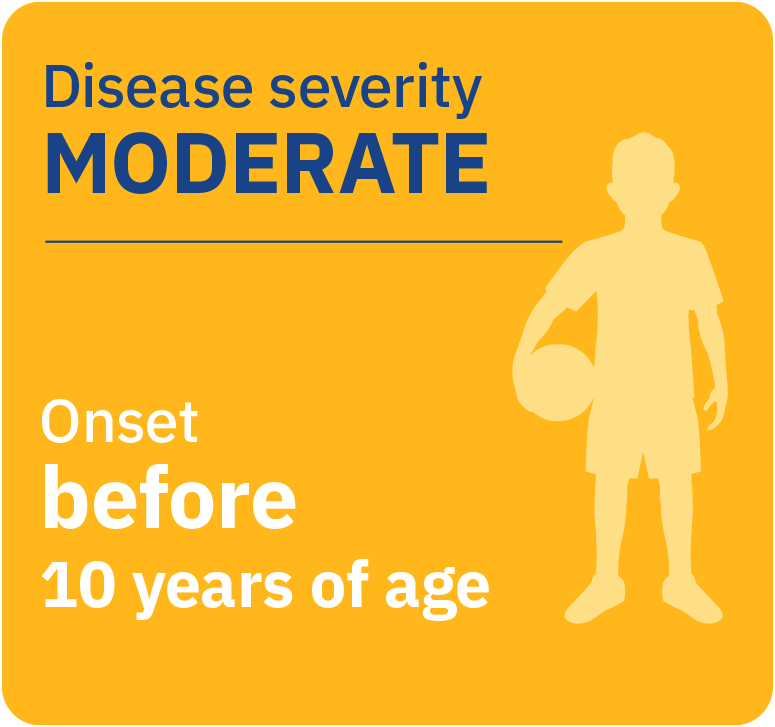
Variations in disease presentation and progression1

mild
moderate

When a neonate or infant has hearing difficulties and impaired motor skills, recurrent infections or skeletal abnormalities that child should be tested for lysosomal storage disease and Alpha-Mannosidosis. Urine tests and blood tests for enzyme activity are reliable in establishing a diagnosis.1 Genetic testing can detect the mutation of the MAN2B1 gene that causes Alpha-Mannosidosis, thus facilitating early identification and treatment.1

Alpha-Mannosidosis has a life-long multi-systemic progression1,3

first presentation

First presentation

Recurrent ear infections associated with hearing loss.1 Progressive impairment of mental functions, speech and motor control.1 Hydrocephalus can be present in the first year of life.1

2-3 decade

2nd-3rd decade of life

Muscular weakness and ataxia, skeletal abnormalities and destructive poly-arthropathy.1 Neuro-cognitive development is usually arrested and psychiatric disorders may also manifest.1

in-adulthood

In adulthood

Patients are unable to achieve complete social independence.1 There are very limited data regarding life expectancy in adults.

Long-term prognosis

The long-term prognosis of this condition is poor, and there is likely to be a progressive clinical deterioration throughout adult life.1,4 The timing of the appearance of symptoms correlates with the severity of the disease, with the severe form appearing in infancy, and usually leading to early death following severe infections.1

The mild and moderate forms of Alpha-Mannosidosis – juvenile onset – have survival into adulthood.1,4

  1. Malm, D. & Nilssen, Ø. Alpha-mannosidosis. Orphanet Journal of Rare Diseases 3, 21 (2008).
  2. Alpha-Mannosidosis (https://rarediseases.org/rare-diseases/alpha-mannosidosis/ – Ultimo accesso Gennaio 2025). NORD (National Organization for Rare Disorders) https://rarediseases.org/rare-diseases/alpha-mannosidosis/ (2020).
  3. Borgwardt, L., Lund, A. M. & Dali, C. I. Alpha-mannosidosis – a review of genetic, clinical findings and options of treatment. Pediatr Endocrinol Rev 12 Suppl 1, 185–191 (2014).
  4. Beck, M. et al. Natural history of alpha mannosidosis a longitudinal study. Orphanet J Rare Dis 8, 88 (2013).