General management of Alpha-Mannosidosis

Non-specific management1

In general, the approach to the patients is proactive, with the aim of preventing emerging complications. After a full physical examination, physicians should focus on the known complications of Alpha-Mannosidosis, such as hydrocephalus, otitis media, hearing loss, dental caries, joint symptoms, kyphoscoliosis, and mental state.1

A multidisciplinary care team is key to patient care. This typically includes an ophthalmologist, an otolaryngologist, an audiologist and a neurophysiologist.2 Clinical evaluations include blood tests and radiological evaluations, with radiographs of the head, spine, knees or other areas of the skeleton displaying symptoms.1

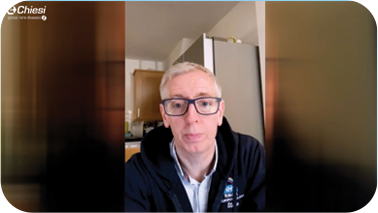
How To Support People with Alpha-Mannosidosis: Because #Alphamatters

Dr. Stewart Rust, Pediatric Neuropsychologist at Royal Manchester Children’s Hospital, discusses the psychological and social impact of rare diseases on everyday life, with a focus on Lysosomal Storage Disorders and Alpha-Mannosidosis. With touching words, he explains that simple gestures like listening and talking to these people can help them feeling more included.

How To Support People with
Alpha-Mannosidosis
Because #Alphamatters

How To Support People with
Alpha-Mannosidosis
Because #Alphamatters

Management of hydrocephalus1

Early diagnosis with measurement of head circumference, diagnosis with ultrasound, skull radiographs or computed tomography (CT).

Management of Otitis Media1
Diagnosis is simple, and insertion of pressure-equalizing tubes reduces the potential impact of reduced hearing. Hearing aids are often deployed and are used as an adjunct to speech therapy.

Dentition1
Dental caries can be frequent in these patients because of reduced dental quality combined with tooth grinding or acid reflux from the stomach. Regular dental support and good dental hygiene is essential.

Joint status1
Joint pathology is monitored throughout the course of the disease. A number of orthopedic surgical procedures may be needed throughout the patient’s lifetime.

Mental state1
Mental state can be monitored with various tests, such as the Wechsler test. Non verbal tests can be deployed to compensate for the hearing deficit.

Preventive measures and monitoring

Prevention of secondary complications is also a vital part of management of Alpha-Mannosidosis. In this regard, prophylactic vaccinations because of immunodeficiency can be recommended.3

Medical history should be taken once or twice yearly, and include the number and type of infections, hearing, weight loss, headache, fatigue, irritability, depression, change in social, domestic, school/work-related activities, walking distance; diarrhea, abdominal pain, muscle pain, joint aches or reduced range of movement, and bone pain.3

With the same frequency, physical examination including otoscopy, ophthalmoscopy, assessment of liver and spleen size, heart and lungs, joint range of motion, gait, neurologic status, and orthopedic evaluation is advocated.3
Growth should also be monitored giving attention to head circumference.

Audiometric and ophthalmologic examination are needed to detect corneal opacities, myopia, hyperopia and strabismus. Neuropsychological testing can determine the functional level. Lastly, full blood work-up and skeletal assessment with plain radiographs (head, knees, spine and symptomatic sites) are recommended, along with bone densitometry (every 2-5 years to assess osteopenia) and CT of the brain (to evaluate size of ventricles and shape and size of cerebellum if signs and symptoms of hydrocephalus are present).3

Thus, medical management of patients with Alpha-Mannosidosis is complex and invariably involves a wide range of experts.
  1. Malm, D. & Nilssen, Ø. Alpha-mannosidosis. Orphanet Journal of Rare Diseases 3, 21 (2008).
  2. Borgwardt, L., Lund, A. M. & Dali, C. I. Alpha-mannosidosis – a review of genetic, clinical findings and options of treatment. Pediatr Endocrinol Rev 12 Suppl 1, 185–191 (2014).
  3. Malm, D. & Nilssen, Ø. Alpha-Mannosidosis (https://www.ncbi.nlm.nih.gov/books/NBK1396/). in GeneReviews® (eds. Adam, M. P. et al.) (University of Washington, Seattle, Seattle (WA), 1993).